

Bangladesh Bank Monetary Policy Statement
Bangladesh Bank Monetary Policy Statement, October–December 2026
Inflation, Credit and the Outlook for Economic Recovery
Ahmed Masum & Co., Chartered Accountants
Executive Summary
Bangladesh Bank has kept the policy repo rate at 9.50% for the October–December 2026 quarter. The Standing Lending Facility (SLF) remains at 11.00% and the Standing Deposit Facility (SDF) at 7.50%. The decision follows the 50 basis-point reduction in the repo rate in July 2026.
The decision comes against a mixed economic backdrop. Headline inflation has declined, but non-food inflation remains high. Economic activity has weakened, private-sector credit growth remains subdued and the banking sector continues to face significant balance-sheet pressures.
The October–December statement is the first Quarterly Monetary Policy Statement issued under Bangladesh Bank's new quarterly framework. More frequent policy reviews should provide businesses and financial institutions with a clearer view of developments in inflation, growth, liquidity, credit and the external sector.
The immediate
policy challenge is to support economic activity without allowing inflationary
pressures to become persistent. The MPS identifies the overall risks as tilted
towards weaker growth and higher inflation.
Key Indicators
|
Indicator |
Latest position |
|
Policy Repo Rate |
9.50% |
|
Standing Lending
Facility |
11.00% |
|
Standing Deposit
Facility |
7.50% |
|
Headline
Inflation |
8.26% – August 2026 |
|
Food Inflation |
7.02% – August 2026 |
|
Non-food
Inflation |
9.32% – August 2026 |
|
FY26 Real GDP
Growth |
4.14% |
|
Quarterly GDP
Growth |
2.2% |
|
Industrial
Output |
-0.28% – Q3 FY26 |
|
Private-sector
Credit Growth |
4.75% – August 2026 |
|
Broad Money
Growth |
12.40% – end-August 2026 |
|
NPL Ratio |
32.78% |
|
FY26 Overall
Balance of Payments |
USD 6.60 billion surplus |
|
Remittance
Growth |
18.9% – first two months of FY27 |
|
Government
Stimulus Package |
Tk. 60,000 crore |
1. Monetary Policy and Inflation
At its meeting on 23
September 2026, the Monetary Policy Committee retained the three policy
rates at their existing levels:
Repo
Rate: 9.50%
Standing
Lending Facility: 11.00%
Standing Deposit Facility: 7.50%
The repo rate had remained at 10.00% since October 2024 before being reduced by 50 basis points in July 2026. Bangladesh Bank explained that an excessively restrictive monetary stance could impose increasing costs on employment and economic recovery without adequately addressing inflation that was largely supply-driven.
The policy
corridor remains asymmetric. The SLF is 150 basis points above the repo rate,
while the SDF is 200 basis points below it.
Bangladesh Bank has not indicated a predetermined direction for the next policy decision. The MPS states that the monetary-policy stance will be adjusted as necessary in response to domestic and global developments.
Inflation has eased, but pressure remains outside food
Headline inflation declined to 8.26% in August 2026, from 9.16% in June. Food inflation fell to 7.02%, while non-food inflation remained at 9.32%. Bangladesh Bank attributes the improvement in food inflation mainly to better domestic supply conditions and favourable base effects.
The relatively high non-food inflation indicates that price pressures remain significant in areas such as transport, energy, rent and services. Earlier increases in administered energy prices have continued to work through the economy, while the fuel-price adjustment in late September is expected to add to transport and production costs.
The inflation outlook is also exposed to global energy and commodity prices, freight and insurance costs, fertiliser and food prices, inflation expectations and the possible effects of implementing the national pay scale.
As an analytical comparison, the 9.50% repo rate is approximately 1.24 percentage points above August headline inflation, but only around 0.18 percentage point above non-food inflation. This is not a monetary-policy rule used by Bangladesh Bank; it simply illustrates the relatively limited margin between the policy rate and persistent non-food price pressure.
The government has
also introduced a family-card programme providing Tk. 2,500 per month to
eligible poor households through mobile financial services, aimed at cushioning
vulnerable households from higher prices.
2. Economic Activity and Credit
The annual GDP figure does not fully reflect the weakness in recent economic activity.
BBS estimated FY26 real GDP growth at 4.14%, while quarterly GDP growth was only 2.2%. Industrial output contracted by 0.28% in Q3 FY26. Bangladesh Bank also points to weak industrial production, power generation, fuel supply and private-sector credit as evidence of subdued activity.
Investment has slowed as businesses contend with high financing costs, energy shortages, infrastructure constraints and uncertainty over domestic and external demand. Manufacturing is additionally affected by higher input costs, supply-chain disruptions and weak global demand, particularly for garments.
Bangladesh Bank considers the economy to be operating below potential, with the output gap widening in Q1 FY27.
Monetary transmission
The response of financial-market rates to the July repo-rate reduction has been relatively quick. The interbank call-money rate declined and moved below the policy rate, while government-security yields also fell as excess liquidity increased and banks increased their holdings of government securities.
Private-sector lending has responded much less strongly. Credit growth was only 4.75% in August 2026, with fresh disbursements contracting in some segments. Bangladesh Bank attributes the weakness to subdued investment, elevated borrower risk, uncertain returns and impaired bank balance sheets.
For businesses,
this means that movement in the policy rate or money-market rates may not
translate immediately into easier access to credit.
3. Banking Sector and Liquidity
The banking sector remains a major factor in the effectiveness of monetary policy.
Commercial banks have accumulated substantial liquid assets, but the liquidity is unevenly distributed. Stronger banks hold significant liquidity, while some weaker institutions continue to face funding and liquidity pressures.
The reported NPL
ratio of 32.78%, together with significant capital erosion, further weakens
the resilience of the banking system.
This has direct implications for credit. System-wide liquidity does not necessarily mean that funds are readily available to all borrowers or that every bank has the capacity to expand lending.
Broad money and private-sector credit
Broad money grew by 12.40% at the end of August 2026, driven mainly by increased net credit to government and higher net foreign assets. Private-sector credit, by comparison, grew by only 4.75%.
The divergence deserves attention. A significant part of the increase in monetary aggregates has not translated into private-sector financing.
Bangladesh Bank also links increased government borrowing from the banking system to weak revenue mobilisation and substantial fiscal financing requirements.
The effectiveness of monetary policy will therefore depend not only on the policy rate and system liquidity, but also on the financial condition of individual banks and their capacity to extend productive credit.
Bangladesh Bank
has specifically identified bank solvency, governance and credit discipline
as areas requiring improvement to strengthen monetary transmission.
4. External Sector and Exchange Rate
Bangladesh's external position strengthened considerably during FY26, with the overall balance of payments recording a USD 6.60 billion surplus. Strong remittance inflows helped support the current account despite a wide trade deficit.
The position weakened during the first two months of FY27, when the overall balance moved into deficit, mainly because of the financial account. The current account remained in surplus, supported by strong remittance inflows.
Remittances grew by 18.9% during the first two months of FY27, providing an important source of external support. At the same time, higher prices for fuel, LNG, fertiliser and other raw materials increased the import bill.
Exchange-rate policy
The taka remained
broadly stable against the US dollar during FY26, helping to limit imported
inflation. Bangladesh Bank has, however, cautioned against excessive
intervention to maintain exchange-rate stability. Such intervention could
reduce the exchange rate's ability to absorb external shocks, affect export
competitiveness and place pressure on reserves.
The MPS therefore places greater emphasis on orderly exchange-rate flexibility.
For businesses,
particularly importers, exporters and foreign-currency borrowers, exchange-rate
assumptions should be tested under more than one scenario. A fixed
exchange-rate assumption may not be appropriate for longer-term financial
planning.
The MPS does not
provide a foreign-exchange reserve figure; reserve adequacy therefore cannot be
assessed from the balance-of-payments figures presented in the statement alone.
5. Global Environment and Principal Risks
Global conditions have become less favourable for Bangladesh.
The prolonged disruption in the Strait of Hormuz could keep petroleum and LNG prices elevated and volatile and increase freight and insurance costs. Higher prices for fuel, LNG, fertiliser, wheat, maize and edible oil would increase import costs and put further pressure on domestic production costs.
The MPS cites the IMF's July 2026 global growth projections of 3.00% for 2026 and 3.40% for 2027, compared with 3.10% and 3.20%, respectively, in April. The IMF also raised its 2026 global inflation forecast to 4.7%.
Global financial conditions have also become less supportive. The MPS reports that the US Federal Reserve raised its target range by 25 basis points in September 2026 and indicated that persistent inflation risks could warrant further tightening.
For Bangladesh, the main channels are higher external borrowing costs, pressure on the taka, potentially weaker capital flows and higher import prices.
Principal risks
|
Risk |
Potential implication |
|
Prolonged Middle
East conflict |
Higher energy and commodity prices |
|
Strait of Hormuz
disruption |
Higher fuel, LNG, freight and insurance
costs |
|
Higher food and
fertiliser prices |
Imported inflation and higher production
costs |
|
Tighter US
monetary policy |
Dollar and external financing pressure |
|
Persistent
non-food inflation |
Slower disinflation and limited policy
space |
|
Fuel-price
pass-through |
Higher transport and production costs |
|
National pay
scale |
Potential inflationary and fiscal
pressure |
|
Higher
government borrowing |
Pressure on money-market and credit
conditions |
|
Banking-sector
weakness |
Reduced lending capacity and weaker
transmission |
|
Elevated NPLs |
Capital pressure and financial-sector
vulnerability |
|
Energy and
infrastructure constraints |
Lower industrial production and
investment |
|
Weather-related
agricultural shocks |
Food inflation and pressure on rural
incomes |
Bangladesh Bank's
assessment is that the overall risks remain tilted towards weaker growth and
higher inflation.
6. Measures to Support Economic Activity
The response to
the current slowdown extends beyond the policy rate.
The government and Bangladesh Bank have introduced a Tk. 60,000 crore stimulus package, including Tk. 20,000 crore to support the reopening of closed factories. Refinance schemes are also available for agriculture, CMSMEs and export diversification.
The Import Policy 2026–2029 permits certain industrial and commercial imports to proceed without letters of credit, with the stated objective of supporting productive imports and private investment.
The effectiveness
of these measures will depend largely on implementation and the ability of
banks to allocate credit to viable businesses. Bangladesh Bank identifies
implementation delays, weak bank balance sheets and high borrower indebtedness
as potential constraints.
7. Outlook for FY27
The near-term outlook remains uncertain.
The MPS cites a World Bank FY27 GDP growth projection of 4.60% and an IMF projection of 3.50%, with the latter revised down from 4.30%. Bangladesh Bank does not provide its own numerical FY27 GDP forecast in the statement.
Bangladesh Bank expects any recovery to depend on improved energy supply, stronger business confidence, better export demand and renewed private investment.
Inflation could continue to decline if food-supply conditions remain favourable and monetary and exchange-rate conditions help contain demand and cost pressures. The pace of disinflation, however, remains subject to non-food inflation, inflation expectations, global energy prices and the recent fuel-price adjustment.
A sustained return
to the inflation target will require broad-based and durable disinflation.
The MPS does not
set out a specific timetable or detailed resolution measures for banking-sector
reform. Progress will therefore need to be assessed through subsequent policy
announcements, regulatory measures and financial-sector indicators.
8. Implications for Businesses and Financial Management
The present monetary and economic conditions have several practical implications for businesses.
Financing and liquidity
Companies should plan financing requirements on the basis of prevailing borrowing costs rather than assuming an early decline in interest rates.
Working-capital requirements should be reviewed regularly, with particular attention to:
receivable collection;
inventory levels;
supplier-credit arrangements;
cash conversion cycles; and
short-term borrowing requirements.
·
Foreign exchange and imports
Businesses with foreign-currency liabilities or substantial imported inputs should assess the effect of exchange-rate movements on costs, debt servicing, margins and cash flows.
Importers should also review the provisions of the Import Policy 2026–2029 applicable to their transactions, particularly documentation and payment arrangements.
Investment decisions
Capital expenditure should be assessed under different assumptions for interest rates, sales growth, energy prices, imported input costs, exchange rates and project implementation periods.
Given the subdued growth outlook and weak private-sector credit, projected cash flows and expected returns should be tested carefully before committing significant capital.
Financial reporting and valuation
The prevailing economic conditions may affect assumptions used in:
impairment
testing;
valuation
models;
expected
credit-loss assessments;
liquidity
forecasts;
going-concern
assessments; and
financial
projections.
·
Companies with substantial borrowings, recurring losses, significant short-term obligations or dependence on refinancing should pay particular attention to liquidity and going-concern assessments.
These matters should be considered in accordance with the applicable financial reporting, auditing and regulatory requirements.
Board and audit committee oversight
Boards and audit committees should keep the following developments under regular review:
inflation,
particularly non-food inflation;
private-sector
credit growth;
call-money
rates and government-security yields;
banking-sector
NPLs and capital;
exchange-rate
movements;
remittance
and balance-of-payments developments;
government
borrowing; and
energy and commodity prices.
·
9. Assessment
The October–December 2026 MPS represents a pause following the July reduction in the repo rate, rather than a major change in monetary-policy direction.
The underlying economic indicators remain mixed. Headline inflation has declined, but non-food inflation remains high. Economic activity and investment are subdued, while private-sector credit has grown only modestly. At the same time, the banking sector continues to face elevated NPLs and capital erosion.
The contrast between 12.40% broad-money growth and 4.75% private-sector credit growth is particularly relevant. It indicates that increased monetary liquidity is not translating proportionately into private-sector financing.
The external
sector provides some support. FY26 ended with a USD 6.60 billion overall
balance-of-payments surplus and remittances remain strong. The overall balance,
however, moved into deficit during the first two months of FY27, while higher
global energy and commodity prices are increasing import costs.
In our view, the effectiveness of monetary policy will depend increasingly on the condition of the banking system and the quality of credit transmission. A change in the policy rate alone is unlikely to resolve the structural constraints affecting investment, productive lending and economic activity.
For businesses,
the present environment calls for sound liquidity management, prudent
borrowing, realistic financial projections, careful foreign-exchange management
and disciplined capital investment.
Indicators to Watch
For the October–December quarter, the following indicators will be particularly relevant:
|
Area |
Indicators |
|
Inflation |
Headline
inflation, non-food inflation, monthly price movements, inflation
expectations |
|
Financial
conditions |
Repo rate,
call-money rate, government-security yields, lending and deposit rates,
banking liquidity |
|
Credit |
Private-sector
credit growth, new loan disbursements, borrower stress, refinance utilisation |
|
Banking
sector |
NPL ratio,
capital position, liquidity distribution, governance and restructuring
measures |
|
External
sector |
Remittances,
balance of payments, exchange rate, import costs, foreign-exchange conditions |
|
Fiscal
conditions |
Government
borrowing, revenue mobilisation and government-security yields |
Conclusion
Bangladesh Bank's first Quarterly Monetary Policy Statement provides a more frequent framework for assessing the country's monetary and macroeconomic conditions. For October–December 2026, the repo rate remains at 9.50%, with the SLF at 11.00% and the SDF at 7.50%.
The decision reflects the balance Bangladesh Bank is attempting to maintain. Inflation has moderated, but non-food price pressures remain significant. Economic activity is weak, private-sector credit growth is subdued and the banking sector remains under considerable strain.
The next phase will depend on whether the decline in inflation becomes more broad-based, whether private-sector credit begins to recover and whether banking-sector reforms improve the transmission of monetary policy to the wider economy.
For businesses, the policy rate should not be viewed in isolation. Financing conditions, bank liquidity, credit availability, exchange rates, energy prices, fiscal borrowing and external-sector developments will all influence the operating environment.
A cautious
approach to cash-flow management, borrowing, foreign-exchange exposure and
capital investment will remain appropriate while the economy adjusts to the
current combination of elevated inflation and weak growth.
Source
Bangladesh Bank, Monetary Policy Department, Quarterly Monetary Policy Statement, October–December 2026, 30 September 2026.
The statistical information and descriptions of Bangladesh Bank's policy position in this Insight are based on the above MPS. The analysis and business implications are the professional observations of Ahmed Masum & Co., Chartered Accountants.
Disclaimer: This Insight is intended for general
information and professional discussion. It does not constitute investment,
tax, legal, accounting or financial advice. Readers should consider their
particular circumstances and obtain appropriate professional advice before
making decisions.
Ahmed Masum
& Co., Chartered Accountants
Audit &
Assurance | Accounting | Taxation & VAT | Advisory | Valuation | Corporate
Finance
Latest Insights From Us
.jpeg)
BSEC Issues New Direct Listing Rules-2026
25-10-2026

Field Audit Completion | Jiehong Nonwoven Products (BD) Co., Ltd.
25-10-2026
IASB Seeks Stakeholder Feedback on Hedge Accounting
25-10-2026
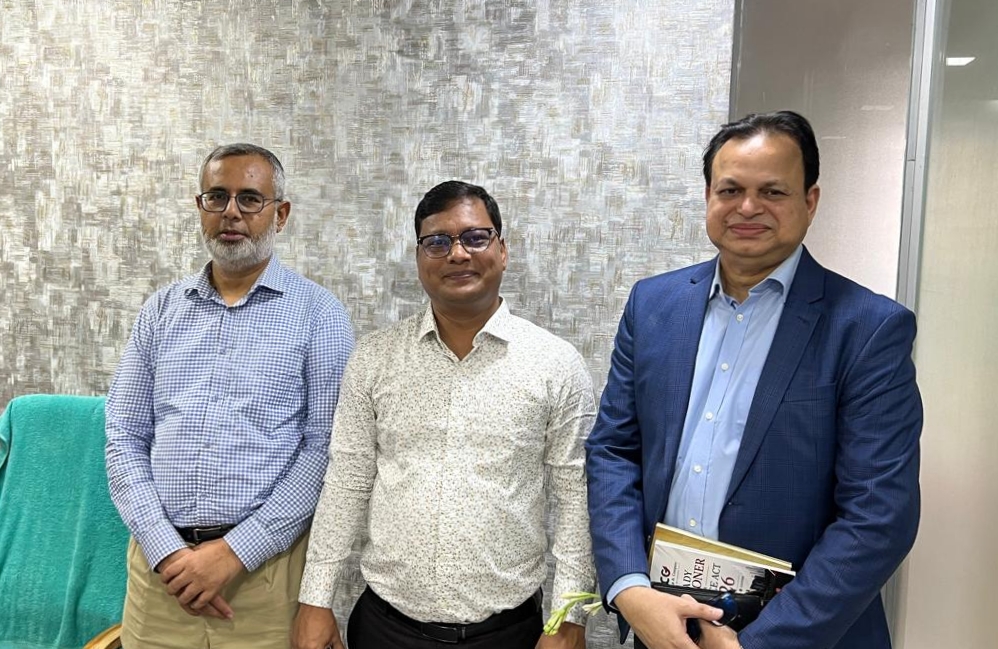
Special Visit by ICAB Leadership to Ahmed Masum & Co., Chartered Accountants
25-10-2026

ACCA Approved Employer (Trainee Development, Gold)
25-10-2026
Bangladesh Import Policy Order 2026–2029
25-10-2026

Congratulations on Qualifying in the ICAB Certificate Level!
25-10-2026

Bangladesh Innovation Fair 2026
25-10-2026

Circular on Foreign Exchange Regulations – Export Trade Transactions
25-10-2026
CA ANZ Sustainability Playbook - Building Sustainability Capability in Accounting & Finance
25-10-2026
Bank Business Centre Establishment, Relocation, Premises Leasing & Rental, and Closure Guidelines, 2026
25-10-2026

DSE Publishes Monthly Review - June 2026
25-10-2026

Bangladesh Offshore Model Production Sharing Contract 2026
25-10-2026

ICAB Introduces Revised CA Syllabus 2025
25-10-2026

Withholding Tax Rules, 2026
25-10-2026
.png)
Bangladesh Bank Releases Monetary Policy Statement
25-10-2026

INVEST BANGLADESH: A New Era of Investment Updates
25-10-2026

Gambling Prevention Act, 2026
25-10-2026
The Finance Act, 2026
25-10-2026

AMC Weekly Spotlight
25-10-2026

The Value Added Tax and Supplementary Duty Rules, 2016
25-10-2026

The Bangladesh Labour Rules, 2015
25-10-2026

THE INCOME-TAX ORDINANCE, 1984
25-10-2026

The Customs Act, 2023
25-10-2026
.jpeg)
The Income Tax Act 2023
25-10-2026
The Bangladesh Labour Act, 2006.
25-10-2026

The Value Added Tax and Supplementary Duty Act, 2012
25-10-2026